Managing Restaurant Reviews: Reviews Are Feeding Your AI Search Performance
Discover why restaurant review management has never mattered more — and the three things you need to do consistently to show up where your customers are searching.

“Reputation management is probably actually digitally more important than it ever has been, because I do think people are asking ‘What do you know about this restaurant?’ That query is going to look at reputation. That query is going to look at what people are putting on social media. ‘Tell me what people are saying about this place’ is different from ‘Who comes up ranked highest for hot wings in my neighborhood.’”

Restaurant and QSR operators are all asking the same question right now: “How do we actually show up when AI recommends where people eat?” Maybe you know this directly, or maybe you’ve heard this from your own restaurant or QSR client.
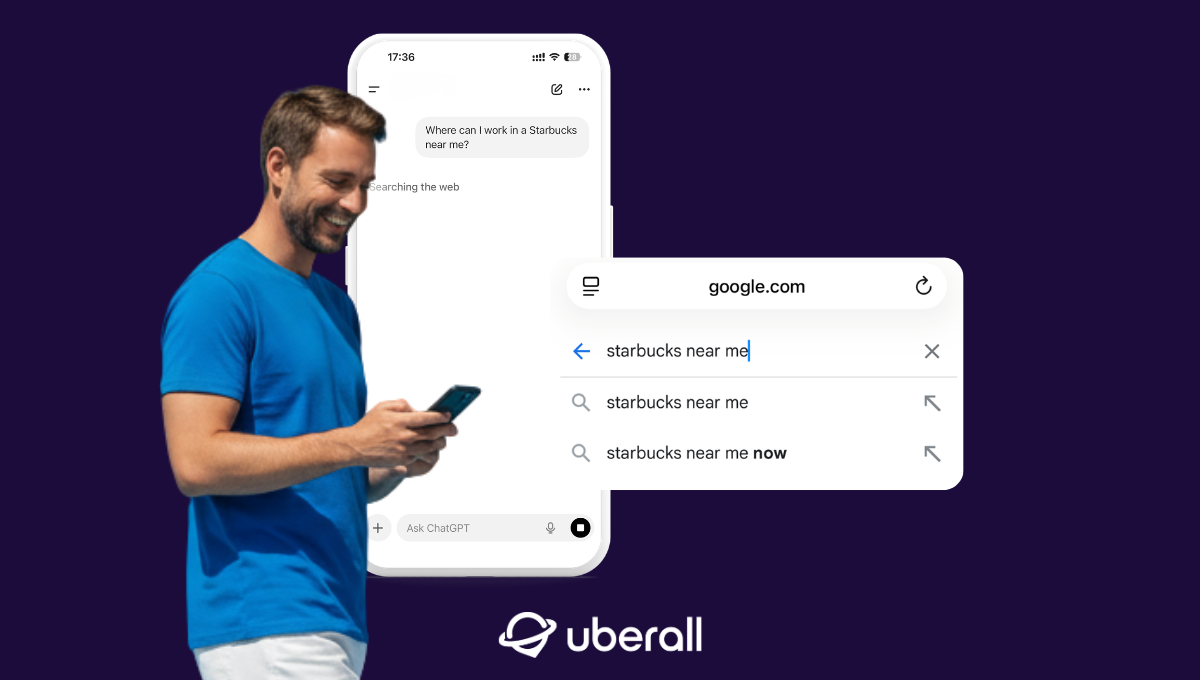
The way customers find where to eat has changed. Whether they’re looking for a spontaneous bite, or they’re planning an itinerary in advance for a trip, this much is clear: They rarely scroll through a list of blue search results. They’re using a real mix of search channels, from ChatGPT and Claude to TikTok, Instagram, or TripAdvisor.
Regardless of where customers are searching — and especially because of this monumental shift in search behavior to favor AI tools — strong restaurant review management and accurate online menus are key to showing up in those answers.
As hospitality marketing expert Rev Ciancio explains: {{quote}}
Review Management Still Matters for Obvious Reasons
I’m a mediocre foodie; I always keep tabs on where I enjoy eating (and where I don’t). I use TikTok, Claude, ChatGPT, Google reviews, and Instagram to compile lists of where to eat when I travel somewhere new. I leave reviews when I enjoy a restaurant; I leave reviews when I don’t enjoy my experience. I almost always pass these recommendations on to anyone asking for them.
I cover one demographic for multi-location restaurant and QSR brands, but I know I represent multiple in that my search behavior isn’t bound by one platform and in that I really value reviews. Nine in ten consumers read reviews when they search for nearby goods and services.
Customer reviews still matter because if restaurant brands aren’t delivering good service — and they’re not demonstrating a will to change that — they’re going to lose customers and struggle to welcome new ones.
And with restaurants, especially, bad experiences stick like Velcro. It’s not just about the food. Anniversaries, birthdays, work events, reunions with friends are at stake. When it’s less expensive to keep current customers loyal and happy with your brand than it is to attract new ones, reviews are the high-ROI content you don’t even need to produce in-house. Your customers do it for you.
Review Management Now Matters More for Less Obvious Reasons
Reviews have become a core pillar of location performance; the trust signals that AI tools and search platforms use to decide which restaurants they recommend.
Review signals matter in every search experience and shouldn’t be underestimated. They dictate discovery across Google Local Pack, organic search, and AI discovery results. Whitespark even found that they are the top ranking factor for local search advertising as well.
Google only recently updated its documentation on local search rankings, with the most notable change found in the Prominence section:
“Prominence means how well-known a business is. Prominent places are more likely to show up in search results. This factor’s also based on info like how many websites link to your business and how many reviews you have. More reviews and positive ratings can help your business’s local ranking.”
Put simply, review signals help search engines and AI models understand the quality of experience your business delivers — and whether you’re trustworthy, relevant, and worth recommending. Our friend Rev Ciancio explains: “Reviews are the single most important trust signal for AI. To dominate, you need a three-part strategy: volume, response, and analysis.”
1. Drive Review Volume, Not Just High Ratings
Rev’s first pillar is volume, and the data backs him up.
Restaurants recommended in AI search responses have, on average, more than 3,000 reviews, while their competitors have less than 1,000.
YOUR GOAL: Your team should make review generation at each of your locations a core KPI. Aim to get every location past the 2,000-review benchmark. Use QR codes on receipts, train staff to ask happy customers at the end of their meal, and use automated SMS or email campaigns. The key is consistency across every location — and this is your competitive advantage.
2. Respond to Every Review, Every Time
Responding to reviews shows customers and AI that you are an active, engaged brand.
But most operators face problems when managing restaurant reviews across multiple locations: “Who should respond to these reviews or complaints? Who has enough time? What is the proper procedure for responding?”
Whether there is one person responsible or multiple local managers jumping in to help respond to reviews, your process is only going to work if you can really ensure every review (positive, negative, or neutral) gets a timely, personalized, professional, on-brand response — even the reviews without any text.
And, according to Google, “timely” means within 72 hours. This goal is impossible to achieve manually at scale — even if you had someone solely dedicated to the task of responding to reviews.
YOUR GOAL: Find a review management tool with a user-friendly inbox that allows your team to respond to reviews from different platforms and locations all-in-one place. Most importantly, to save yourself time and headspace, create a standardized response template for your local managers. Develop a library of response templates for common scenarios (e.g., praising a specific dish, addressing slow service, or thanking a regular).
These templates help craft thoughtful and personalized responses that are ready to go as-is or can be quickly customized. AI tools help draft responses at scale, with local managers approving before they go out.
3. Analyze Your Reviews for Business Intel
It would be impractical to make changes to every product or policy every time a negative review comes in, so you need to look for patterns in complaints or compliments and use them to continuously improve service at your locations.
According to Rev, reviews are a free source of operational insights. These passages of text on your Google Business Profile, Yelp, or TripAdvisor listing give your team invaluable glimpses into whether customers are fed up with wait times or excited about new menu items, for example.
YOUR GOAL: Set up a regular cadence, such as a weekly or monthly restaurant review monitoring, where your team analyzes recent feedback to identify recurring patterns. Tag reviews in a spreadsheet by category (e.g., “food quality,” “service speed,” “cleanliness”). You can also use sentiment analysis tools to capture these common themes or issues.
This intel helps you fix operational issues before they affect your business. It also inspires your content strategy and gives you real material to use on your website, socials, business profile posts, to highlight what your customers love about your menu, service, or locations.
Consistency Is the Key Ingredient to Restaurant Review Management
Because AI is “writing” your brand narrative based on the real-time information it fetches from all these data sources, there’s so much more at stake if you’re not actively monitoring and optimizing your restaurant’s reputation.
I intentionally used the word “monumental” before to describe the shift we’re seeing when it comes to AI search. Data revealed that global consumers were sending ChatGPT 2.5 billion prompts a day in July 2025. Imagine where we are now.
As overwhelming as this may seem, focus on the three goals above, and focus on consistency. That simple act of replying to a review might seem small, but it tells search platforms your business is alive, responsive, and reliable — the kind of brand they can safely recommend.
Volume, freshness, sentiment, and context all matter, and they matter everywhere your hungry customers are searching.
Ready to Transform Your Business?
Connect with our partnership team to learn how Uberall can help you achieve similar results. Get a personalized consultation and discover the opportunities waiting for your business.